Cloud kitchens aren’t new to the UAE. The country’s restaurant and coffee shop sector has undergone a significant transformation backed by the rise of cloud kitchens. This shift has been driven by several factors, including the high population density in cities like Dubai and Abu Dhabi, and the heavy reliance of the Emirati community on fast delivery services in their daily lives.
Other factors include the diverse expatriate community which has created a vast market for international cuisines, high smartphone usage rates, and food delivery app adoption.
A cloud kitchen, also referred to as a dark kitchen or ghost kitchen, is a fully equipped kitchen solely operated by cooks and kitchen staff. It is specifically designed for fulfilling delivery orders, with no dine-in space for customers. This model emphasizes operational efficiency and tech use.
The UAE cloud kitchen market was valued at $430 million in 2025 and is projected to reach $1.083 billion by 2032, reflecting a compound annual growth rate (CAGR) of 14.1% from 2025 to 2032.
In this article, we’ll walk you through the cloud kitchen market in the UAE, from key features to challenges, and trends. We’ll also show you can use Foodics to manage one or more cloud kitchens.
Trends & Growth Drivers in the UAE Cloud Kitchen Market
Cloud kitchens in the UAE are experiencing rapid growth, driven by a combination of economic, behavioral, and technological factors that support this model. These factors include:
- Emphasis on delivery services
Consumers in the UAE have developed a delivery-first mindset, making food orders through delivery apps the norm rather than the exception.
This shift has also reinforced the dominance of major food delivery platforms, which offer extensive customer reach.
- Operating costs and ROI
High rent and labor costs in the UAE’s restaurant industry present significant challenges for almost all types of restaurants. These rising costs are prompting entrepreneurs to consider the cloud kitchen model, which requires less space and fewer employees. This shift helps reduce fixed operating expenses and improve restaurant return on investment (ROI).
- Demographic diversity & demand for international cuisine
The UAE market is known for its immense demographic diversity, leading to a demand for brands that specialize in international cuisines.
The cloud kitchen model offers the flexibility to launch multiple virtual brands from a single location, effectively catering to this diverse demand.
- Scalability and flexibility
One of the key advantages of the cloud kitchen model is its scalability. A successful kitchen can quickly replicate its brand and business model in new geographic locations with minimal investment. Additionally, this model allows for flexibility in changing the menu and adapting to food trends without the need for a complete redesign of the restaurant.
- Cloud kitchen tech
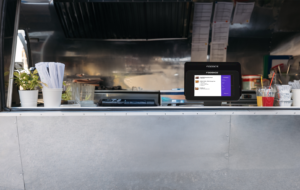
Technology is the foundation for cloud kitchens. Top tools include advanced cloud point-of-sale (POS) systems, such as Foodics, which ensure seamless order management from multiple delivery platforms. These systems ensure complete automation in processing orders and transferring them directly to the kitchen. POS systems also provide accurate reports and analyses on customer behavior, inventory, sales, and more to enhance decision-making.
- Real estate & regulatory shifts for UAE ghost kitchens
Real estate and regulatory frameworks are gradually evolving to support new business models. Real estate developers are now offering fully equipped cloud kitchen complexes.
This allows brands to concentrate on cooking and marketing instead of investing time and resources into building and designing kitchens from scratch.
Further reading: Cloud Kitchen Marketing: Everything You Need to Know
Challenges and Risks Facing Cloud Kitchens in the UAE
- Intense competition and market saturation
The low cost of establishing a cloud kitchen has attracted numerous entrepreneurs to the market, resulting in intense competition and significant market saturation. This is especially the case in popular food categories like burgers and pizza. This environment makes it challenging for new brands to stand out and capture market share.
- Reliance on delivery platforms and commission fees
Cloud kitchens depend heavily on external delivery platforms to reach customers. This reliance can be costly, as these platforms often charge high fees and commissions, which pressure restaurant profit margins.
- Customer loyalty challenges
Building customer loyalty for your cloud kitchen is challenging in a virtual model. Without a dining area or direct interaction with customers, your restaurant often becomes just a name on delivery apps. Especially since cloud kitchens rely on digital marketing and customer reviews on the apps to gain attention.
- Real Estate feasibility study to determine optimal delivery locations
To achieve efficiency in a cloud kitchen, you need to select your locations with care to ensure the fastest delivery times. However, rents in these prime areas can be high. Conversely, choosing a remote and lower-cost site may restrict effective delivery coverage. Therefore, finding the right balance is crucial to ensure optimal geographic coverage for efficient service.
- Challenges related to day-to-day operations
Effectively managing daily cloud kitchen operations requires precision and quick coordination, especially when multiple brands operate within the same space. One major challenge is maintaining accurate inventory levels, particularly with fluctuating movement of products. Packaging quality also plays a role in ensuring food arrives in excellent condition, reflecting the identity of each brand.
- Regulatory compliance and food safety
Cloud kitchens must adhere to the UAE’s strict regulations and food safety standards. As centralized production facilities, any lapses in hygiene or safety can pose serious health risks. Any violations could result in immediate closure and revocation of licenses, negatively affecting all the brands served by the kitchen.
How Does Foodics Support Cloud Kitchens in the UAE?
Foodics offers various F&B-focused solutions for the restaurant and café sector, specifically tailored to support cloud kitchens in the UAE.
- Assisting with transition and expansion
Foodics’ point-of-sale (POS) system enables restaurants to smoothly transition to or expand into a cloud kitchen model. It provides essential technical tools for order management, eliminating the need for expensive infrastructure.
- Reducing startup costs and accelerating market entry
Foodics’ system allows new brands to quickly enter the market using its affordable cloud platform. Entrepreneurs can avoid the heavy investment in complex systems and expensive equipment, allowing them to focus on a streamlined setup and gradually scale their businesses. This approach significantly lowers both investment and technical barriers to entry.
- Integrating cloud kitchen management tools
Foodics offers a comprehensive system, including a POS system, kitchen display system (KDS), and inventory management tools. This integration is crucial for cloud kitchens that process orders from multiple channels, ensuring efficient and organized workflows. Additionally, the Foodics Marketplace includes various other systems, such as order management, loyalty apps, and order fulfillment applications.
- Multi-brand strategy
Foodics empowers cloud kitchens to manage multiple brands efficiently. By managing and operating different menus for several brands from a single cloud kitchen, Foodics maximizes the use of space and human resources.
- Expansion into new global markets and cuisines
The Foodics system supports geographic expansion into new regions and the exploration of various cuisines for successful brands. It enables quick and effective adaptation to the demands of different regional markets.
- Data-driven optimization
Foodics POS system provides detailed reports, data, and analytics that help you operate your cloud kitchen effectively. Using menu engineering, you can make data-driven decisions regarding the most profitable dishes and adjust prices based on demand. The system also optimizes kitchen workflows to minimize waiting times and delivery times.
Success Stories of Cloud Kitchens in the UAE
The UAE’s ghost kitchen industry has seen several success stories that highlight the effectiveness of this business model and its potential to transform the food delivery landscape.
Kitopi is a leading player in this sector, offering a centralized operating structure and advanced technologies to manage numerous virtual brands. It allows cloud kitchen brands to expand quickly across multiple cities without the need for physical dining spaces.
Other operators such as Kitch, Kaykroo, and Cloud Restaurant Management have shown that the industry can achieve high operational efficiency and improved profitability.
Global success stories
In London, the MEATliquor restaurant chain transformed one of its branches into a delivery-only dark kitchen as part of its Deliveroo Editions program.
The chain removed the seating area and converted the space into a kitchen dedicated solely to online orders and delivery drivers.
Similarly, Loco’l in Los Angeles switched from a traditional dine-in restaurant model to a virtual, app-only operation after closing all its dine-in locations.
This change repurposed the kitchen infrastructure for takeout orders instead of in-store dining.
These transformations were driven by several key factors, including:
- Rising rent and labor costs
- Increasing demand for online food orders
- The flexibility offered by a delivery-based model that eliminates the need for a physical location or customer foot traffic.
These examples illustrate that transformation doesn’t always mean closing down a business entirely. It can involve redirecting resources, such as the kitchen, staff, and brand, toward online ordering channels, launching virtual brands that operate alongside the restaurant, or converting existing locations into multi-brand cloud kitchens.
Further reading: 10 Reasons Your Restaurant Needs a Branded Online Ordering System
Final Words
Ghost kitchens have proven to be more than just a passing trend. They represent a significant structural change in the UAE’s restaurant and coffee shop sector.
Due to its scalability and flexibility, this model aligns perfectly with the delivery-first culture, offering effective solutions to the challenges of high operating costs and market competition.
The cloud kitchen market in the UAE is expected to grow, making it a profitable investment for kitchen operators and companies.
In this context, Foodics plays a vital role as a strategic partner for cloud kitchen management companies and small kitchens. The platform provides the tech solutions necessary for cloud kitchens to efficiently handle multiple orders from various platforms. Foodics also offers a robust technological infrastructure that supports the launch and management of various virtual brands from a single kitchen, while also enabling data-driven menu and pricing decisions through its reporting capabilities.
Discover the benefits of using Foodics solutions for your cloud kitchen in the UAE!